
Make your garden a hedgehog haven
A hedgehog can travel a mile in a single night looking for food and a mate. What it finds along the way is up to us. Here are the things that genuinely make a difference — most of them are free.
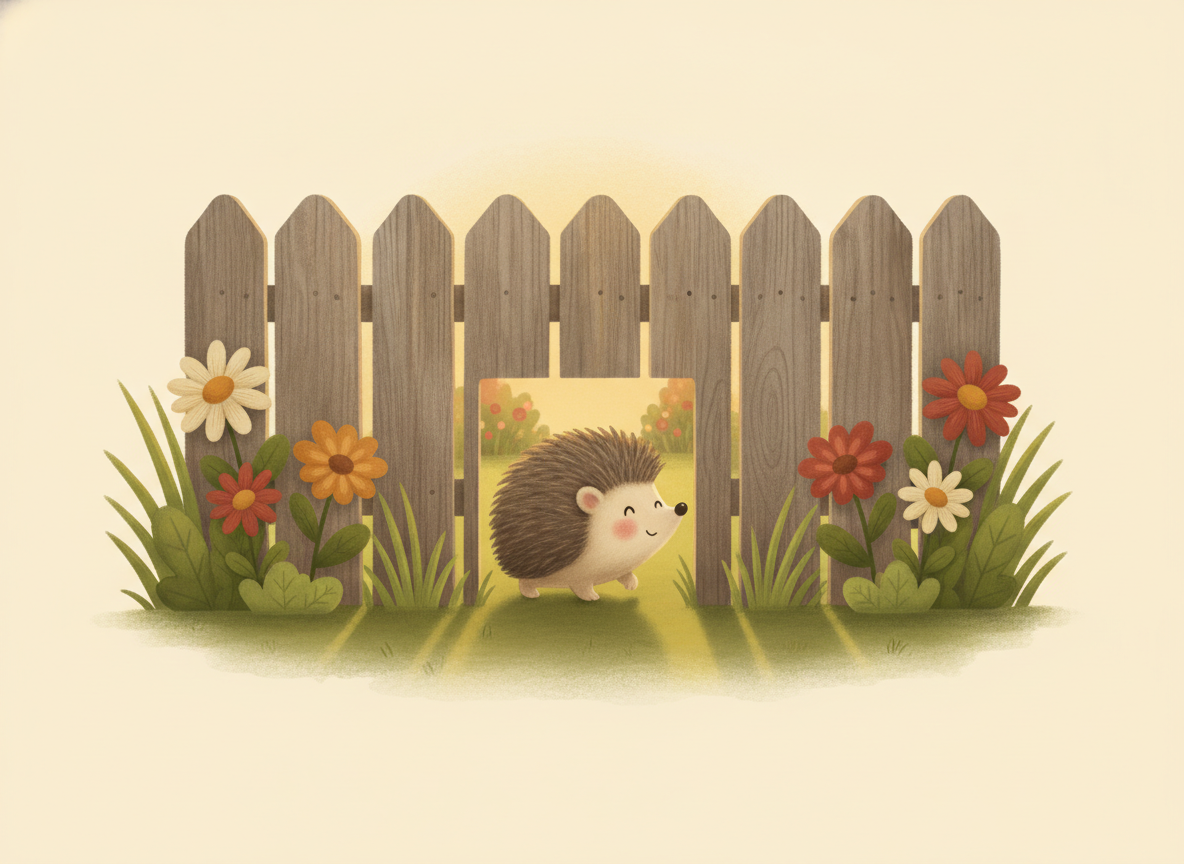
Cut a hedgehog highway
Modern fencing has carved our gardens into islands. A hole just 13cm × 13cm — about the size of a CD case — is big enough for any hedgehog and too small for almost every pet.
Cut one at the bottom of your fence, or dig a shallow channel underneath it. Then knock on next door and ask them to do the same. Ten gardens joined up is a proper territory; one garden on its own is a dead end.
Renting? A gap under a gate or a removed brick in a wall does exactly the same job.
Food and water — the right sort
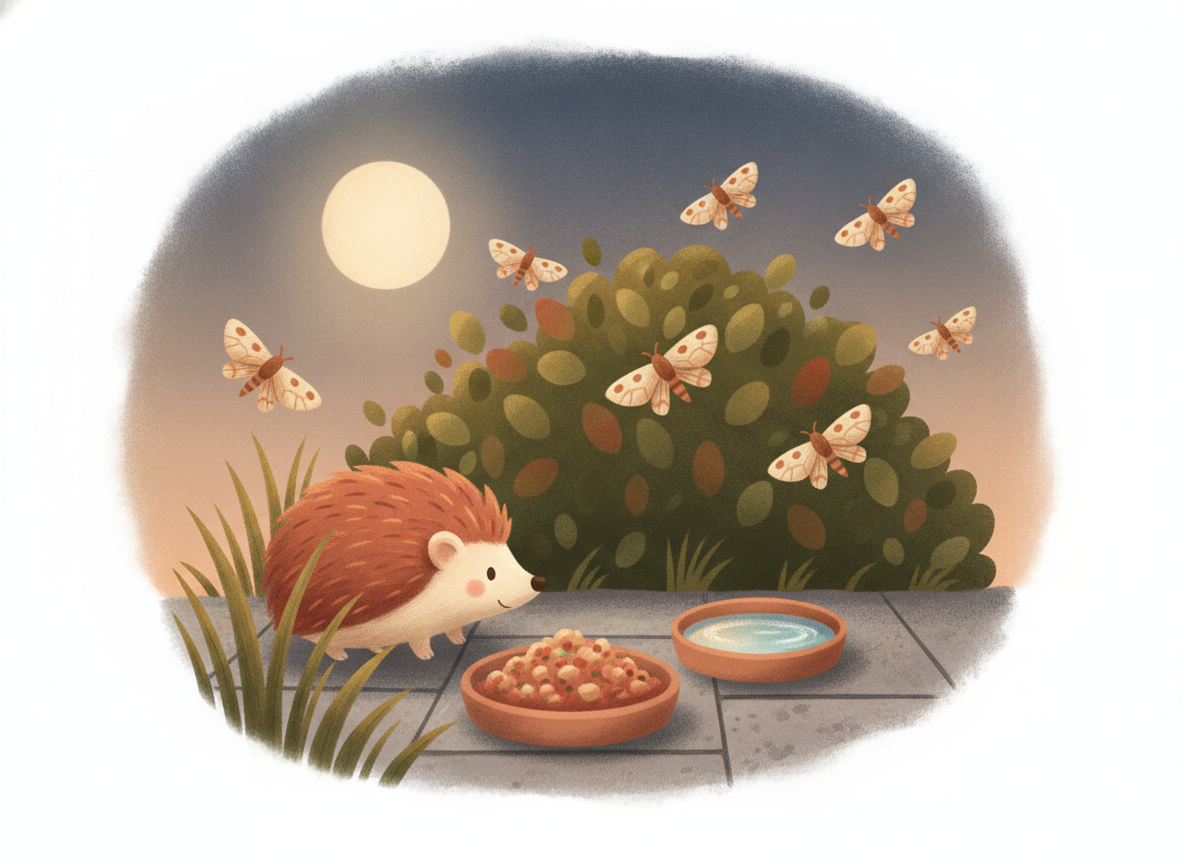
Fresh water in a shallow, heavy dish, topped up every day, is the single kindest thing you can leave out. In a dry summer it saves lives.
If you want to feed them, put out meaty cat or dog food (not fish-based) or proper hedgehog food. A few dry cat biscuits alongside are good for their teeth.
Never milk. Hedgehogs are lactose intolerant and milk gives them fatal diarrhoea. And go easy on mealworms — hedgehogs adore them, but they're the equivalent of a chip supper every night and they cause serious bone disease.
Put the food out at dusk under a shrub or in a feeding station, and take away anything uneaten in the morning so you don't feed every rat in the parish.
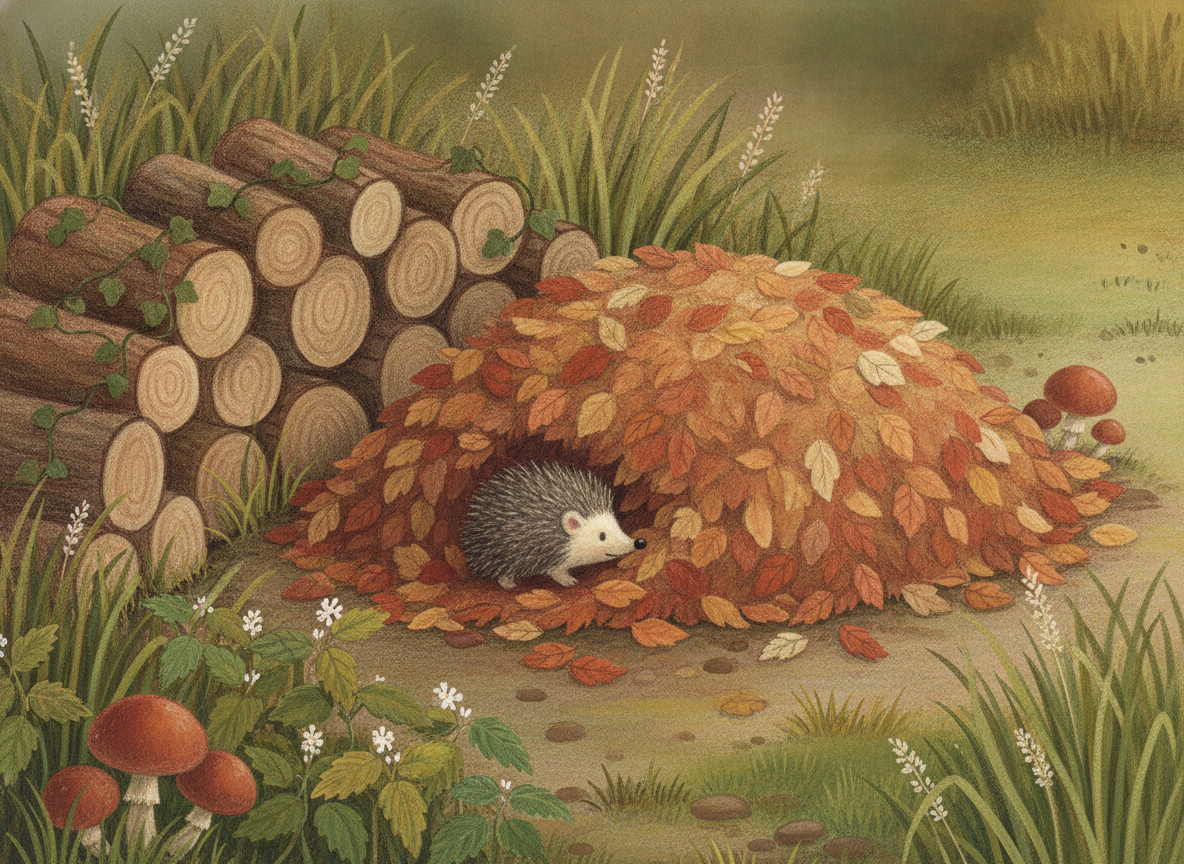
Leave a corner wild
The tidiest gardens are the emptiest ones. A stack of logs, a heap of leaves left where they fall, a patch of long grass and a few nettles — that's a hedgehog's larder, and its bed.
Beetles, worms, caterpillars and slugs all live in the mess. No mess, no dinner.
Skip the slug pellets and chemicals. Even the ones sold as wildlife-friendly wipe out the food chain hedgehogs depend on — and a hedgehog that eats poisoned slugs eats the poison too.
The dangers we see most
Almost every hedgehog that comes through our door was hurt by something preventable.
Strimmers & mowers
A hedgehog's instinct is to curl up, not run — so it stays put and takes the full hit. Always check long grass and under hedges by hand before you start, and never strim straight into a pile of leaves.
Ponds & pools
Hedgehogs can swim, but they drown when they can't climb out of steep or slippery sides. Lay a plank, a pile of stones or a bit of chicken wire as a ramp. The same goes for uncovered drains and swimming pools.
Bonfires
A bonfire heap is a perfect hedgehog nest. Build it on the day you burn it, or move the whole pile onto fresh ground with a fork — not a spade — and check the base with a torch first.
Netting & litter
Football nets, pea netting, elastic bands, crisp packets, tin cans, plastic rings. Hedgehogs get their heads and legs caught and can't get free. Store netting off the ground and pick up litter when you see it.
Roads
If it's safe to stop, move a live hedgehog to the side it was heading for. If you see one dead in the road, it's worth a look nearby — there may be a nest of hoglets close by.
Dogs
Put the outside light on and give the garden ten seconds' warning before you let the dog out at night. Most hedgehog-dog injuries happen in the first few minutes after the back door opens.
Autumn checklist 🍂
Autumn is our busiest time. Small hedgehogs born late in the year often aren't heavy enough to survive hibernation.
- Weigh-in worry? A hedgehog out in November or December — at any hour — needs help.
- Under about 450g going into winter and it will not make it through on its own. We aim to get them to around 600g before release.
- Leave food and water out right through autumn — they're trying to pile on weight.
- Check bonfire piles, and leave leaf litter alone where you can.